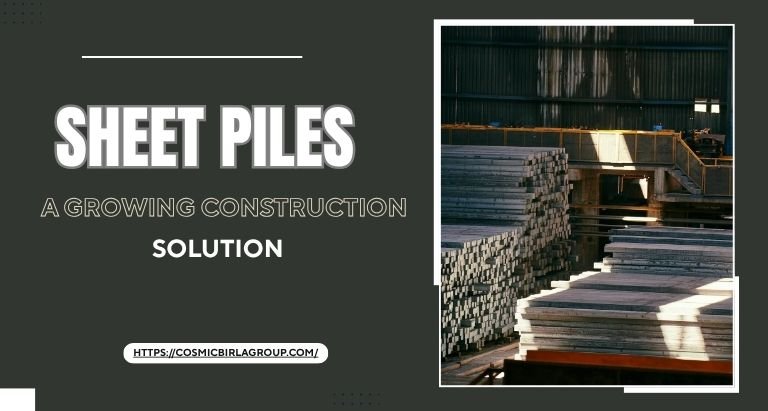
A growing share of infrastructure work now happens where excavation has little room to spread. Contractors may be beside an active road, a river edge, an occupied building, or a railway corridor that must keep running during construction.
Ground movement, water entry, and site access then become part of the same problem. Sheet piles are drawing more interest because they can create a narrow retaining line for temporary or permanent work.
The demand follows the changing mix of infrastructure and construction projects.
Tight Sites Leave Less Room for Open Excavation
Urban projects often push excavation close to property lines, utilities, and neighbouring structures. Basements, metro works, underpasses, and deep service trenches may have only a narrow strip available for ground support.
Sheet pile retaining walls hold soil close to the excavation edge. The space saved can then support bracing, machinery, access, and material movement inside the site.
Ports and River Projects Need Support Beside Water
Quay walls, jetties, river terminals, and bridge foundations place retained soil beside active water. Contractors need a barrier that can define the work area while excavation and foundation activity continues behind it.
Interlocking steel sheet piles form a continuous wall, which suits cofferdams, waterfront structures, and riverbank work. Each project creates its own demand for profile, length, and driving method.
Flood Protection Reaches Below The Visible Wall
An embankment may look stable at the surface while seepage continues through weaker soil underneath. Over time, that movement can wash out fine material and reduce support along the bank.
Sheet piles can create a deeper barrier below the structure and slow this underground flow. This is why they are used in embankment strengthening, riverbank protection, drainage works, and river training projects.
Transport Construction Relies Heavily on Temporary Works
Underpasses, bridge foundations, and rail upgrades often begin beside live traffic or operating tracks. A contained excavation gives crews room for piling and foundation work while surrounding movement continues.
Sheet pile walls can support the ground during this stage, while sheet pile cofferdams create a drier area around foundations near water. Suitable piles may remain in place or return to service elsewhere after extraction.
Site Teams Value Material that Arrives Ready to Install
Manufactured sections reduce preparation after delivery, which matters when equipment, labour, and traffic control carry high daily costs.
- Narrow footprint: The wall sits close to the excavation and preserves working space.
- Planned lengths: Piles arrive in sizes suited to driving depth and cut-off level.
- Clear handling: Bundle marks and length segregation help crews organise lifting.
- Temporary reuse: Suitable piles may serve again after extraction and inspection.
These practical details can influence both programme time and site organisation.
Ground Conditions Decide Where The System Fits
Every site places different demands on a retaining wall. Soil density, groundwater, buried obstructions, nearby buildings, corrosion exposure, wall depth, and vibration limits all shape the section and installation method.
Open sites may suit vibratory driving, while sensitive locations may call for press-in equipment or pre-drilling. Sheet pile demand grows where these conditions match the strengths of the system.
Final Thoughts
Sheet pile demand reflects the kind of infrastructure now entering construction.
More projects combine tight boundaries, water exposure, deep excavation, and active surroundings, which makes compact retaining systems more relevant.
Cosmic CRF, part of Cosmic Birla Group, supplies sheet piles and cold-rolled formed sections for engineering and infrastructure use. This connects our portfolio to the materials behind large civil works.To learn more about our engineering portfolio and sheet pile products, please contact us.