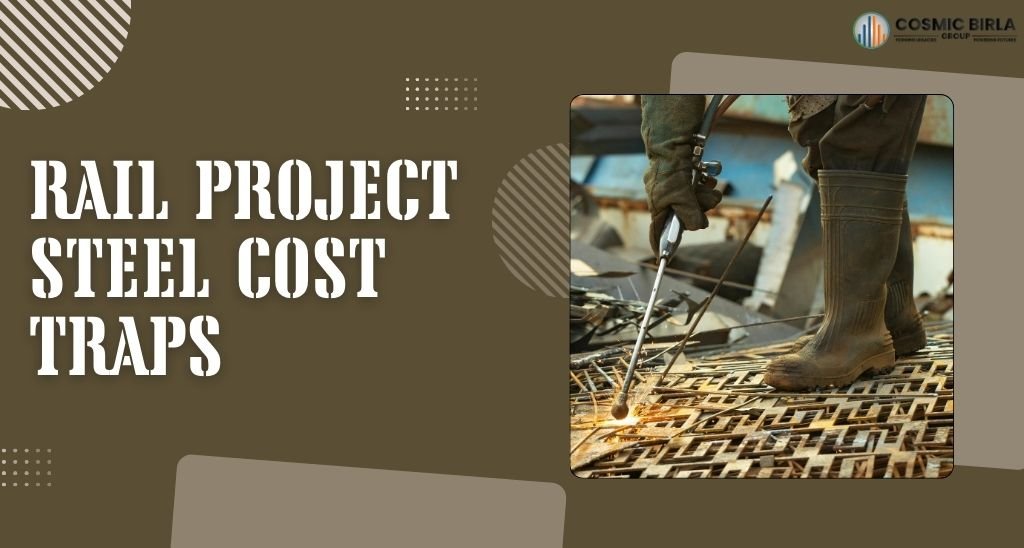
Two steels can share the same grade and yield and still behave very differently on the shop floor. You approve a material that meets the drawing, only to find it warps during forming.
The weld holds on paper but fails in heat. The batch clears inspection yet resists no torque. These issues surface late, after schedules have locked and budgets have little room.
Here’s why spec alignment needs to move beyond numbers and what it means for the teams handling casting, forming, welding, and assembly.
Visual Matches Mislead on Performance
Material specs often converge around broad norms (thickness, elongation, tensile strength), but share little in how they behave under real-world conditions.
On paper, a supplier’s alternative may tick every required field. But in a forming line, its bend tolerance breaks earlier.
In a weld shop, its thermal behavior shifts fitment. Visual similarity creates false confidence. When those parts enter production, their small deviations disrupt jig setups, joint angles, and even post-weld finishes.
The Trouble Begins During Forming
Many issues trace back to how steel responds to cold-rolled forming or punching.
A spec with slightly higher hardness might resist rolling and increase springback. Another might crack along laser edges despite having adequate ductility on paper.
These are not defects; they are behaviours. But if you do not account for them while matching supply, every part becomes a gamble.
You spend time reconfiguring rollers, changing punch dwell times, or softening bends—all of which delay throughput and strain operations.
Weld Quality Suffers from Inconsistency
Welding failures rarely show up in testing, but they creep in during large-batch production. A slight difference in surface chemistry might change how the weld pool flows.
Some plates form slag differently. Some deform around the heat zone in ways that affect downstream fit.
A consistent batch creates momentum; you set parameters once, and every join behaves the same. An inconsistent batch forces guesswork. The result is rework, heat distortion, and inspection slowdowns.
Standard Drawings Do Not Guarantee Compatibility
Drawings reflect geometry. Specs reflect material class. But performance comes from how that material flows, forms, and fuses in sequence. That means two parts, both approved by drawing and grade, may not sit flush once fabricated.
A flange might angle out. A plate may not hold tolerance at the edge. These differences only emerge when parts meet each other. And when they do, it is the whole unit (not the individual part) that fails fit-up.
You lose time on shimming, angle rework, or worst case, part rejection.
Why Procurement Needs Material Behaviour History
A supplier with long-term forming data on their own steel batches becomes a key asset. You get to know how a specific profile behaves during forming and welding, not just how it performs under lab conditions.
This lets you design parts that do not just fit specs, but fit real-world production.
For component buyers, this reduces unknowns. For QA teams, it creates consistency. For planners, it means fewer change requests during production.
When this history is missing, every new material adds hidden risk.
The Financial Cost Runs Through The Schedule
What looks like a small spec mismatch on day one can ripple into day thirty.
A rejected batch creates cascading effects, like new purchase orders, lost production slots, retesting, fresh transport costs. Even partial delays affect assembly sequencing.
Suddenly, the problem is not technical. It is financial. Delays stretch billing cycles. Teams are held idle. Penalties grow sharper.
A predictable material may cost slightly more upfront, but saves exponentially across the build cycle.
Final Thoughts
At Cosmic Birla Group, we spend as much time validating forming behavior as we do reviewing specs.
Our cold-rolled profiles are not just designed to meet geometry; they are tested for forming, punching, welding, and fit-up reliability across batches.
That is how our teams help buyers reduce variability, planners reduce rework, and fabricators hit schedules with confidence.
Because in projects where every hour matters, the most reliable material is the one that behaves exactly as expected. To learn more, get in touch with us today.