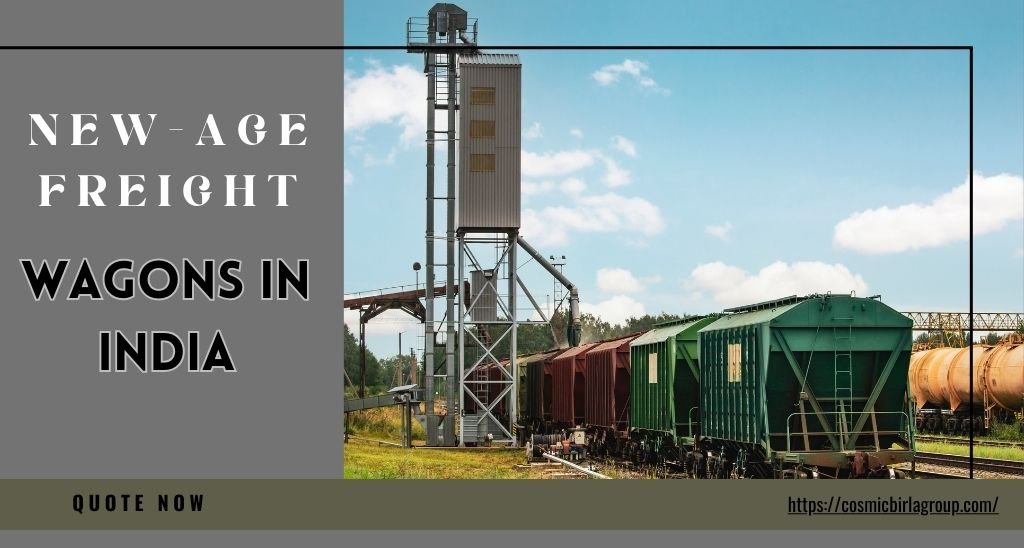
Freight wagons today carry more, move faster, and run longer with less room for downtime. That quiet shift adds pressure across the supply chain.
Parts that passed a decade ago now fall short. From underframes to brackets, every detail shapes performance at scale.
If you handle sourcing, it may be time to rethink what qualifies as a reliable part.
Here’s how new design shifts are changing what buyers look for.
Payload Efficiency Is Driving Shape, Not Just Strength
The traditional wagon focused on bulk. Today, payload per axle defines design value. That shift pushes manufacturers to find strength without adding weight.
This has a direct effect on steel profiles. Thicker material no longer justifies itself unless it performs better per kilogram. Wagon component suppliers need to demonstrate shape efficiency, including how well a beam or bracket manages load without excess volume.
Wagons that use cold-formed sections take advantage of this. Deeper ribs, formed flanges, and load-spreading bends all contribute to lower mass and higher yield per run.
If your vendor supplies only flat stock or machined blocks, you might be missing performance gains that modern forming methods now make standard.
Faster Assembly Timelines Shift the Tolerance Conversation
Speed changes where time gets saved. In today’s rail builds, more time gets recovered during assembly (not transport). That puts focus on how accurately parts fit together without rework.
Traditional cast or manually welded parts often need onsite adaptation. They may meet specs in isolation, but introduce small delays once they enter the jig. In fast-moving wagon plants, those mismatches compound quickly.
Component vendors now need to match jig logic, not just drawing tolerance. Repeatable forming, clean holes, and stress-relieved shapes ensure fewer fit-up surprises. That difference becomes visible not in the part, but in the way the full structure comes together across 200 builds, not just one.
Subsystem Interoperability Reduces Rework and Quality Holds
No component exists in a vacuum. The same flange might carry a door, a sensor mount, and a grounding cable. What matters now is how well your part works inside someone else’s subassembly.
Infra buyers increasingly want evidence that vendors understand those overlaps. That means:
- Sending parts pre-milled for sensor plates or brackets
- Ensuring punch patterns match fastening systems without site drilling
- Forming profiles that retain flatness across lengths for mating with pre-cut panels
- Designing connection zones that limit distortion from field welding
Vendors who anticipate these needs deliver fewer surprises. Their parts travel cleaner through inspection, testing, and integration. In large-scale projects, that lowers stoppages and speeds up client handovers.
Durability Requires Predictable Behavior Under Load
Wagon failures do not come from obvious weak points. They come from subtle inconsistencies, like thin areas in bends, stress risers at weld transitions, or fatigue at joints that shift with terrain.
Modern design teams now look for forming techniques that reduce these risks. Cold-formed profiles often create continuous geometry without requiring welds or bolt-ons.
This means fewer thermal-affected zones, fewer joints to monitor, and smoother load distribution under real motion.
If your part supplier varies behavior from batch to batch, that risk gets built into every wagon. More than pass-fail metrics, what buyers need now is predictable behavior: the part performs the same on day 1, day 1000, and after its fifth major route.
Data-Backed Quality Helps Planners Plan Smarter
In the past, quality checks happened mostly at the receiving dock. Today, they are part of project planning. Infra buyers want test reports, batch records, and traceability logs in advance.
This allows planners to forecast maintenance cycles, pre-clear vendors for public-sector audits, and align shipments with payment milestones.
If your supplier cannot provide this clarity, you might face documentation gaps that affect more than compliance; they delay decisions. Stronger vendors offer part-level traceability, heat certifications, and forming logs as a default, not a favor.
Final Thoughts
Modern wagons raise the bar for every component they carry. That shift opens new questions:
How is the part formed? How does it behave under load? What stops it from varying across batches?
At Cosmic Birla Group, we help clients navigate these questions through informed sourcing. Our profiles are shaped to perform consistently across forming cycles and project demands, so infra buyers can move forward with fewer unknowns.
If you’re re-evaluating your component suppliers for the next wave of wagon builds, we’re ready to show where forming, repeatability, and fit start making the real difference. Let’s talk.