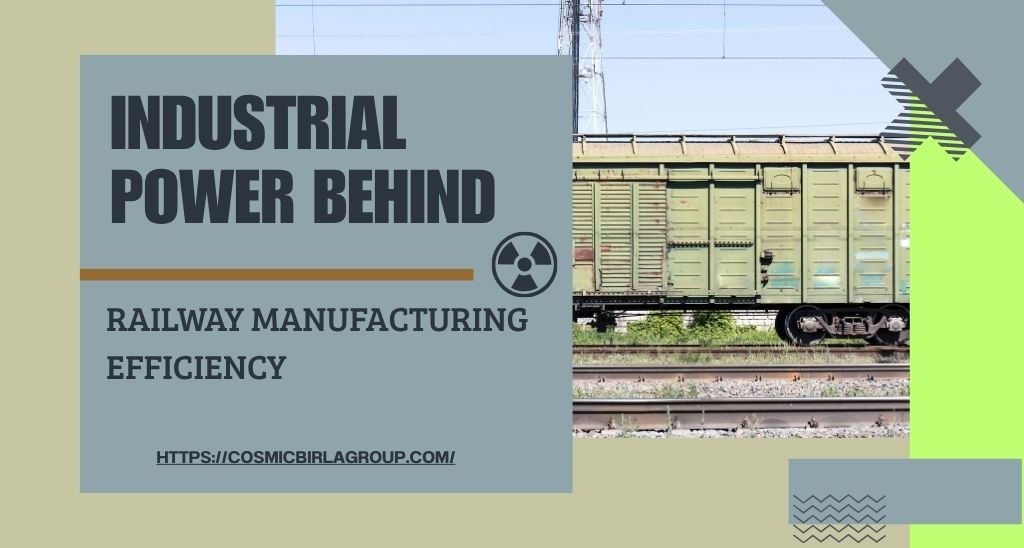
Railway manufacturing moves in sequence. One delayed section, one missing casting, or one hold-up in a supporting component can slow work far beyond the original item.
You may still have labour, drawings, and machine time ready, yet the build starts losing pace once one link in the chain slips. This is why supply gaps feel larger in railway production than they do on paper.
A useful way to look at the issue is through industrial groups and the way they hold related capabilities together.
Why Gaps Spread Fast
Supply gaps spread quickly because railway manufacturing depends on linked parts moving in step. A wagon or coach programme rarely waits on a single finished item alone, since formed sections, cast components, sub-assemblies, and engineering inputs all need to arrive in a workable sequence for planning to stay clean.
Once one input loses pace, stores teams start holding material for matching parts, fabrication teams begin adjusting schedules, and procurement teams spend more time closing shortfalls than preparing the next release. You can see the effect in small daily moments such as rescheduled cutting, delayed fit-up, or idle fixture time, though the larger issue sits in lost production rhythm across the full line.
Railway manufacturing rewards continuity, so even a modest gap can travel through planning, fabrication, dispatch, and final assembly with surprising speed.
How Groups Help
Industrial groups reduce those gaps by carrying connected capability across more than one part of the supply chain. A group structure gives you more room to align production needs across related businesses, which can help materials and components move with better coordination when demand shifts or one stream tightens.
In railway work, this matters because upstream and downstream items often influence each other more closely than buyers first assume. A group with activity in CRF sections, wagon construction essentials, castings, engineering products, and trading support can often read these connections earlier and respond with greater control.
Cosmic Birla Group reflects this kind of spread through businesses such as Cosmic CRF, Prilika Enterprise, Asansol Steel, Comet Technocom, and AVB Entech, each linked to industrial supply in its own way.
Why Continuity Improves
Continuity improves when related capabilities sit inside one broader industrial base instead of standing too far apart. You still need planning discipline, vendor follow-up, inspection control, and realistic schedules, though a connected group can support these efforts with stronger internal visibility across supply points that matter to railway manufacturing.
This helps you as a buyer because the conversation moves beyond one item price and starts including readiness, coordination, and the ability to hold supply flow under pressure. A broader manufacturing base can also support repeat programmes more smoothly, especially when similar sections, castings, and fabricated inputs need to move in familiar patterns over time.
In practical terms, you gain a steadier path from raw material and formed parts to the components that keep wagon and coach production moving.
Final Thoughts
Supply confidence grows when railway manufacturing draws from a connected industrial base.
You feel the value in cleaner planning, better coordination, and a stronger chance of keeping production moving when one supply point comes under pressure.
For us, this idea sits close to the way our group has grown across railway-facing manufacturing and supply, with capabilities that range from CRF sections and wagon essentials to castings and engineering products.
When related strengths sit within one group, supply support becomes more practical, and that often helps railway manufacturing hold its pace with fewer avoidable gaps.If you’re reviewing supply continuity for a railway programme, it may help to look beyond individual items and study how connected industrial capability supports the full production flow.